

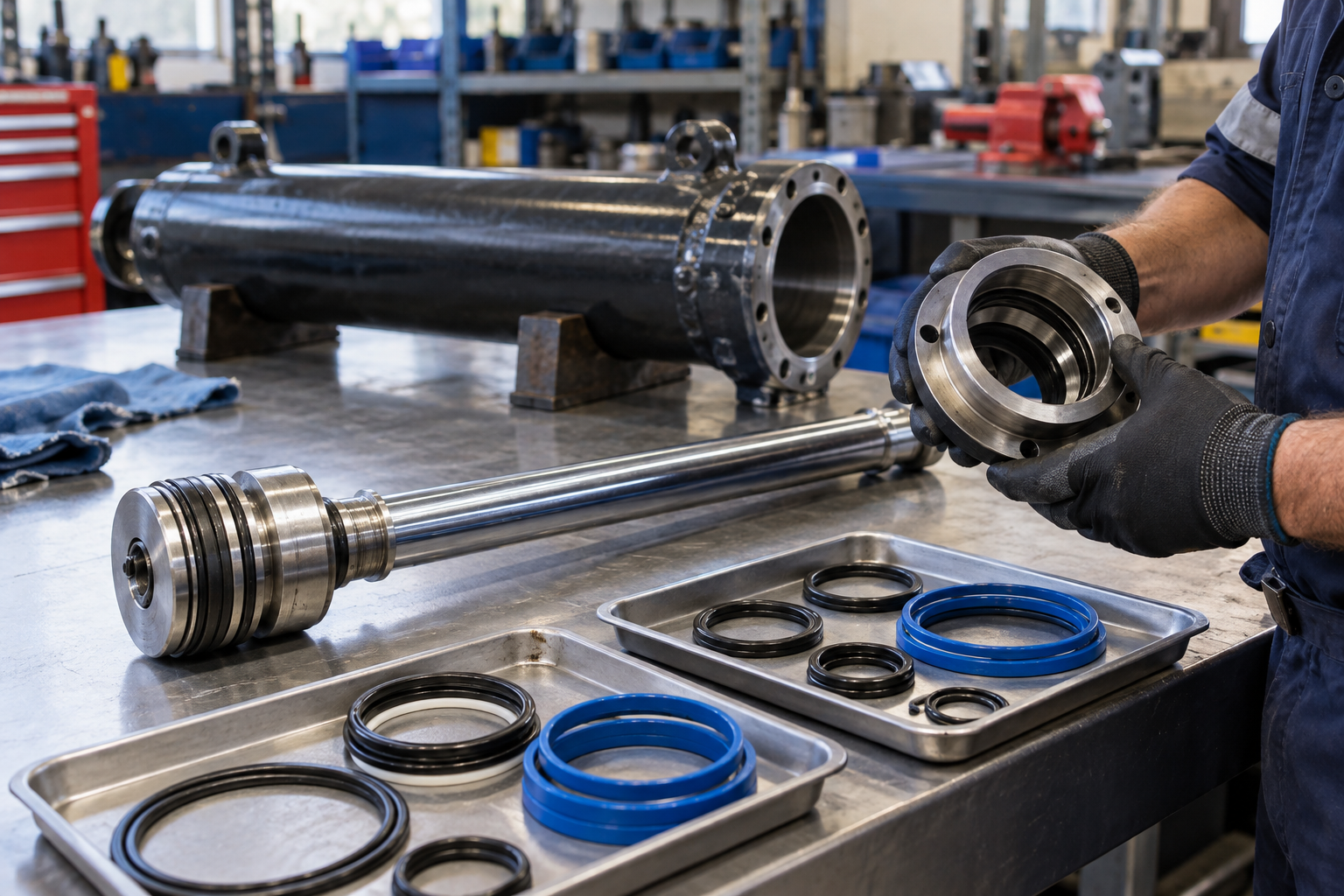
Oil around a hydraulic cylinder often leads to a straightforward question: can it be fixed with a new seal kit? Sometimes resealing is the appropriate repair. In other cases, replacing seals without assessing the cylinder and its operating conditions can leave the cause of the problem unresolved.
For owners arranging hydraulic repairs in Toowoomba, the useful starting point is an inspection rather than a parts guess. Hydraulic Sales provides cylinder assessment, reseal and repair support for agricultural, industrial, transport and mobile equipment. Understanding what an assessment can reveal helps you discuss the repair scope and compare the next steps with more confidence.
A leak is an observation, not a complete diagnosis
Tell the repairer where oil was noticed and which function was being used. Oil seen near a cylinder may originate from a connection or another nearby component, so its visible location does not establish the failed part. A technician needs to assess the source rather than assume the rod seal is responsible.
Other symptoms also need context. A cylinder that does not hold position may be affected by an internal issue or by another part of the hydraulic circuit. Describe the behaviour and when it occurs, but avoid concluding that a particular seal has failed based only on how the machine feels.
If equipment is leaking or behaving unexpectedly, stop using it and follow the manufacturer’s shutdown and isolation procedures. Do not use your hand to trace a pressurised leak, work under a hydraulically supported load or disconnect components without appropriate competence and controls.
What resealing can address
A reseal involves replacing the relevant sealing components after the cylinder has been assessed. It may be suitable where seals have deteriorated and the surfaces and other components they work against remain serviceable. The right decision depends on the cylinder’s design, condition and application.
Ask which seals are included in the proposed work and whether inspection may reveal additional requirements. “Seal kit” can sound like a complete answer, but it does not describe the condition of the rod, gland, barrel or supporting components. An initial enquiry and a confirmed repair scope may therefore be different stages of the job.
Hydraulic Sales’ hydraulic cylinder repairs in Toowoomba include workshop assessment, leak and wear diagnosis, seal replacement support and advice on repair versus replacement. Discuss the symptoms before ordering parts or arranging removal.
Why the rod surface matters
The cylinder rod moves through the sealing arrangement. Damage to that surface can affect how the seal performs. A new seal does not restore a scored, corroded or otherwise damaged rod to its intended condition. The repairer needs to assess the relevant surfaces and determine whether they are suitable for continued use.
The visible extended portion of the rod is not the whole assessment. Some areas may not be safely accessible while the cylinder is installed, and internal condition cannot be confirmed from a distant photograph. Share photographs only when they can be taken safely; do not dismantle equipment to obtain them.
Ask how any identified rod damage changes the recommendation. Depending on the cylinder, specialist repair, component replacement or a replacement assembly may need consideration. Do not assume every workshop provides every machining or coating process; have the proposed work and any external arrangements explained.
Look at protection and support as well as seals
A cylinder’s wiper helps limit the entry of dirt and moisture as the rod retracts. Contamination can damage sealing and other internal surfaces. If inspection identifies an issue with protection or contamination, ask how it will be addressed rather than treating the new seals as the only relevant work.
Support and alignment also matter. Side loading and inadequate bearing support can contribute to damage to the rod or cylinder surfaces and then the seals. These are assessment questions for the technician, not reasons for an operator to adjust mountings or change the machine’s geometry.
A repeated leak deserves a clear history. Provide the date of the previous repair, the function involved and whether operating conditions changed. A pattern of recurrence is useful evidence, but it does not prove that the earlier seals were faulty or that the previous repair caused the problem.
Give the workshop the application details
Record the machine make and model, cylinder identification if available, and the function it performs. Include information from the equipment’s records about the hydraulic fluid and any relevant modifications. If an attachment or operating arrangement has changed, mention it at the first conversation.
Sealing components must suit the application. Size alone does not establish that a seal material or design is appropriate for the fluid, pressure, temperature and motion involved. Let the technician establish the specification using the relevant equipment and component information.
Explain how the machine is used and when it is needed, without turning an operational deadline into an assumption about turnaround. Ask what can be confirmed before inspection and what depends on parts availability or the findings. This helps you plan alternative equipment or maintenance work while the cylinder is being assessed.
Compare the complete repair options
When the findings are available, compare more than the price of a seal kit. Ask what the proposed work includes, which components remain in service and whether there are outstanding issues elsewhere in the machine. A useful recommendation explains why the chosen approach suits the condition found.
If replacement is an option, confirm that suitability includes the machine’s requirements and connections, not simply a cylinder of similar appearance. Availability, the scope of repair, installation requirements and the equipment’s intended use all belong in the discussion. There is no universal cost threshold at which every cylinder should be replaced.
Before the equipment returns to work, confirm the appropriate inspection, testing and handover arrangements. Keep the repair record with the machine’s maintenance information and note any follow-up action. Further concerns should be assessed through the proper service process rather than by repeated adjustment in use.
Frequently asked questions
Can a new seal kit stop every cylinder leak?
No. Seals may be part of the solution, but the leak source and cylinder condition need assessment. Damaged surfaces, support issues or other faults may require additional work. Ask for a recommendation based on the findings.
Does a cylinder that drifts always have worn piston seals?
No. Holding or movement problems can involve the cylinder or other parts of the hydraulic circuit. Describe the symptom and let a competent technician diagnose it. Do not attempt a test under an unsupported load.
Should I bring the cylinder in already dismantled?
Ask Hydraulic Sales first. The workshop may need identification, history and the assembly’s original condition to assess the issue. Removal and dismantling require suitable skills and safety controls. Confirm the preferred arrangement before starting work.
Can Hydraulic Sales help with related hydraulic parts?
The business supplies hoses, fittings, seals and pump-related products alongside cylinder-repair support. See its hydraulic products and services and discuss the specific machine and component requirements with the team.
Discuss your cylinder repair in Toowoomba
Contact Hydraulic Sales on (07) 4633 3261 or send a cylinder-repair enquiry. The workshop is at 14 Eyers Street, Toowoomba, with listed weekday hours of 8 am to 5 pm. Explain the symptoms, provide the equipment details you have and confirm the assessment arrangements. A considered diagnosis helps establish whether resealing, further repair or replacement is the appropriate next step.